
Josita Colbert

Sister Josita Colbert, SNDdeN was born and raised in Baltimore. An only child, she remembers telling her parents, “God blessed you with just me.”
When Sister Josita was just 13, her mother died from an illness, and her father, also an only child, moved to Chicago to care for his mother. Sister Josita went to live with her aunt, uncle and cousins. She attended St. Frances Academy, a Catholic school for Black girls. That was the 1950s, and racial discrimination was a lived experience.
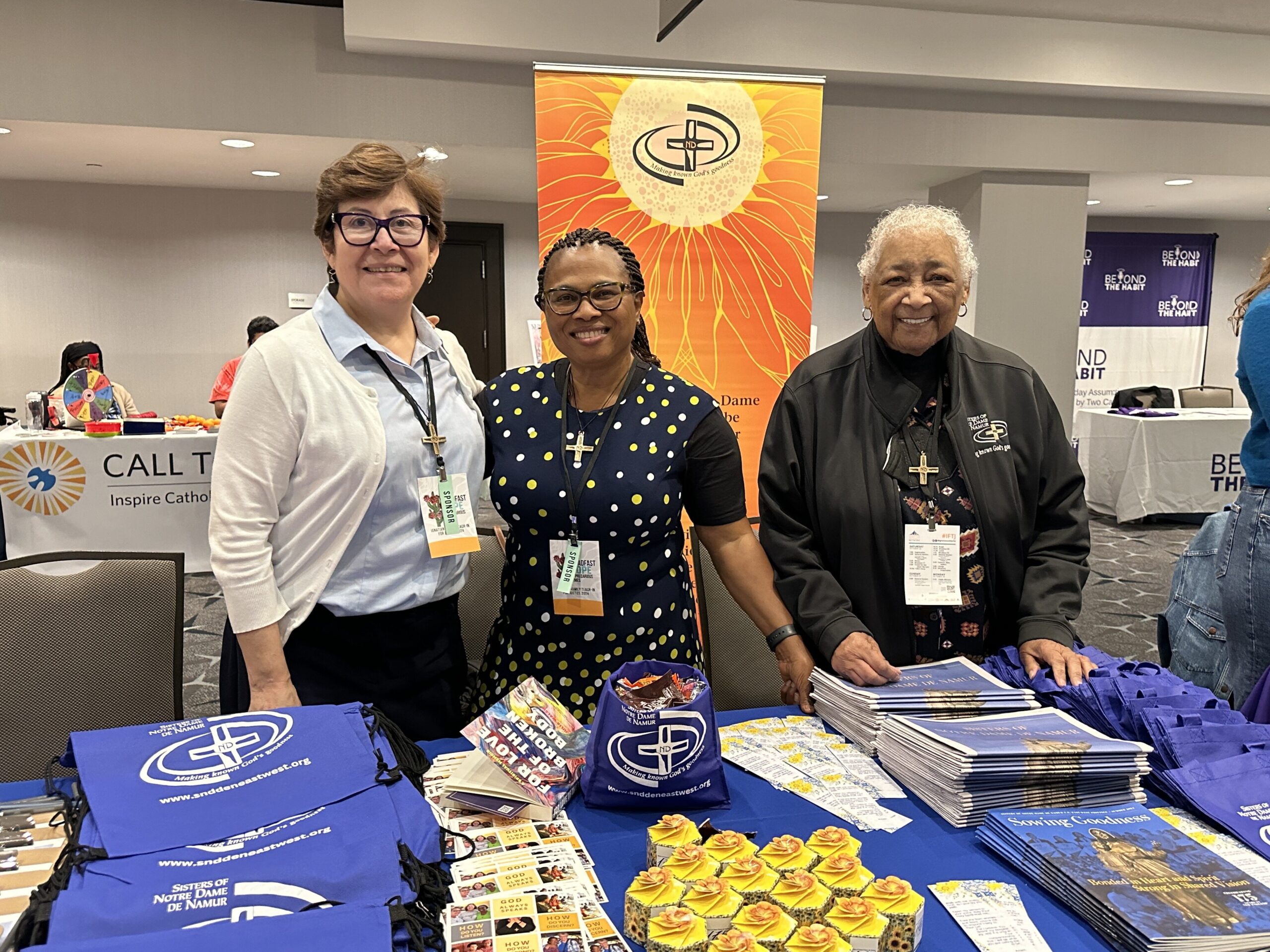
From left, Sister Bárbara Gutiérrez, Vivien Echekwubelu, and Josita Colbert, SNDdeN at the Ignatian Family Teach In.
“There were three Catholic schools in the area, but they wouldn’t take Black children,” she recalls. “I took three buses to get to St. Frances, which was run by the Oblate Sisters of Providence. They are the first order of Black nuns in the U.S.”
As young as fifth grade, Sister Josita felt called to religious life. In 1956, she entered with the Oblate Sisters. Her first teaching job was at the kindergarten level, where one of her young students went on to become a priest. He figures back into her story years later. While she loved children of all ages, she especially enjoyed third graders because the children were fun, curious and inquisitive.
In 1968, the National Black Sisters’ Conference was organized, and Sister Josita was a founding member. She had the opportunity to meet many women from different congregations, all focused on promoting a positive self-image for Black Catholic women religious and for all people of color. Years later, in 2019, she was elected president of the organization.
Interactions with fellow NBSC founding members Sisters Martin de Porres Coleman, Dolores Harrell and Teresita Weind, SNDdeN had an enormous impact on her life. Sister Josita was inspired by their international work and heard God calling her to join them.
“There were more opportunities within an international congregation, and I felt I could do more to help my people, in addition to teaching,” she explains. “Sister Eileen Sullivan was the Provincial at that time, and she was very good to me, especially in working with the Oblate Sisters on the transfer to SND.”
As a novice all over again, Sister Josita poured herself into learning about the foundresses, St. Julie and Françoise Blin de Bourdon.
“I had the chance to go to Belgium, where St. Julie walked and prayed and grew up,” she shares. “It was so meaningful because her life and religious life weren’t easy. She overcame in spite of it all.”
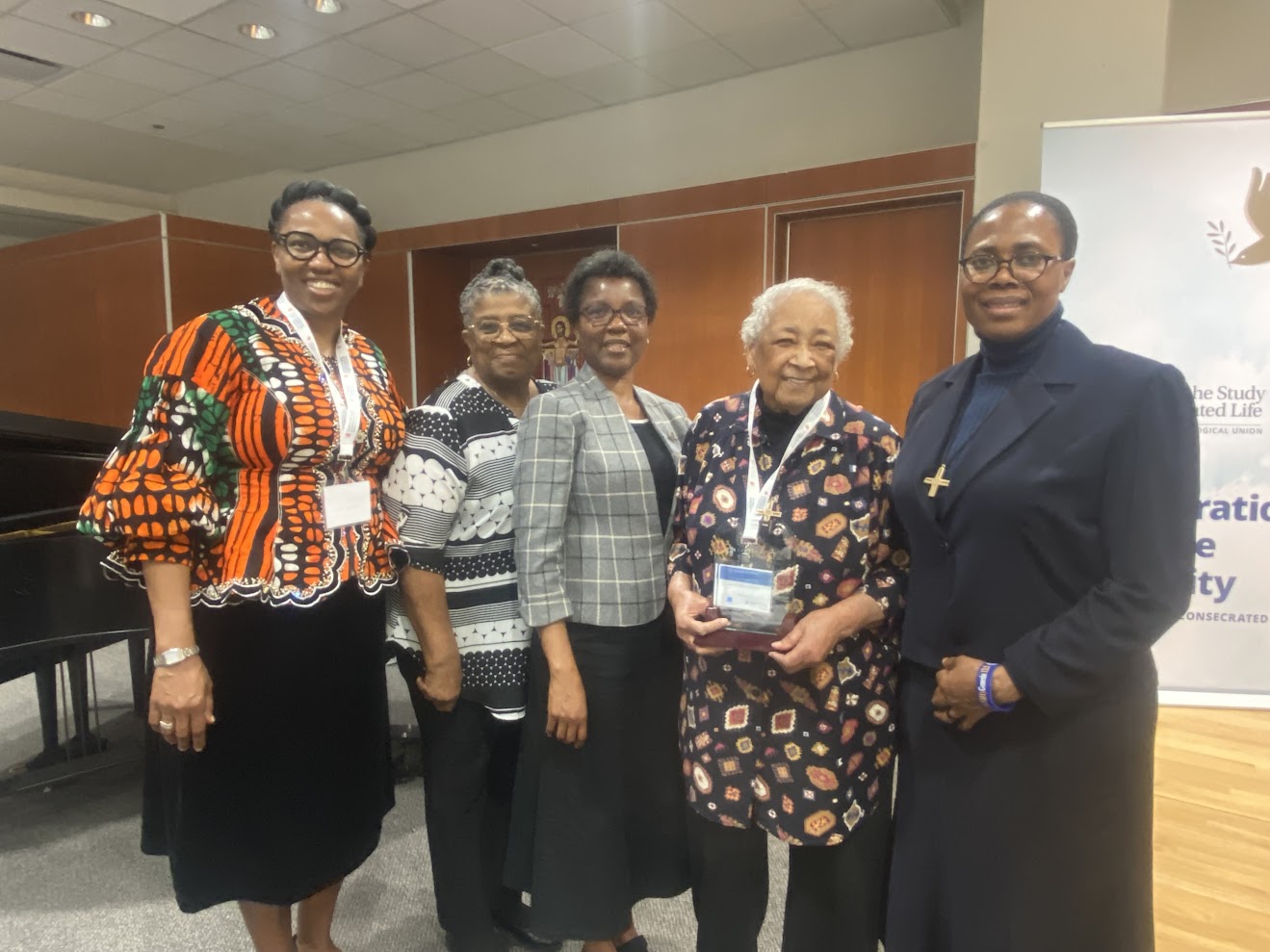
From left, Sister Chioma, Loretta, Sister Limeteze, Sister Josita Colbert, SNDdeN and Eucharia.
Her own life’s work has been to encourage people to be themselves, do their best work and gain confidence in their abilities. As a teacher at Kolbe Cathedral High School in Bridgeport, Connecticut, that meant she developed and ran after-school programs to help students who needed academic support. “We met on Wednesday nights from 7-9 p.m. I still remember that. I had the whole basketball team most weeks.”
One of those boys went to college and then on to play professional basketball. Now he’s the athletic director at Kolbe. “I love to look back and see what my students have accomplished,” she says proudly.
And that boy who became a priest? Following the assignment at Kolbe, Sister Josita applied to work with elementary children at St. Francis Home for Children, a state institution in Connecticut. She was told they were looking for someone with experience teaching younger children, so she asked that young priest to write her a letter of recommendation. She got the job.
Always one to use her gifts to help others, Sister Josita also served the ministry of vocations, and she remains an active member of the National Religious Vocations Conference. In 2024, she received the Lifetime Member Award.
To someone discerning a call from God today, she gives the same advice now as she did then: “Focus on what it is you know God is calling you to. There are obstacles, but the important thing is to listen to God and not let negative talk turn you away.”
Sister Josita was again recognized when, in 2025, the Center for the Study of Consecrated Life honored her longtime commitment to the Center and its mission. One of her contributions is work on a CSCL project titled “Moving Along the Arc: Women and Men Religious as Agents of Reconciliation and Transformative Action Toward a More Racially Just Church and World.”
“I look at who I am as a Black religious woman and the gifts and skills God gave me to share with others,” she says. “I try to be an advocate and talk about diversity as a positive thing. God made us all equal.”
As she celebrates her 70-year Jubilee in 2026, Sister Josita is grateful for her mentors and the support she has received from leadership, her family, the Sisters and other women of color. She also looks to Gospel hymns for encouragement and affirmation. One of her favorites is “Goodness of God” by CeCe Winans.
“Understanding God’s goodness has been key in my life,” she says.
Updated in 2026.