
Step into Our History
With a rich history of empowering communities, we advance education, social justice and spiritual growth, making God’s goodness known in the world.
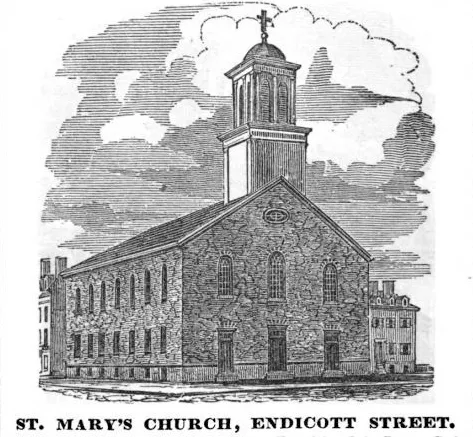
St Mary’s Church in Boston
The Sisters of Notre Dame de Namur, founded in France in 1804 by St. Julie Billiart, reflect her belief in the goodness of God. St. Julie saw education as the best means to accomplish this and established schools to “teach them what is necessary to equip the children for life.”
From the heart of France to the United States and across the globe, we have been transforming lives and communities for over two centuries.
“We exist only for the poor, only for the poor, absolutely only for the poor.”
–St. Julie Billiart, Letter 86
Learn About Our Journey
1800s | Early 20th Century | Mid-Late 20th Century | 21st Century

Follow along with our milestone events!

Sisters Set Sail
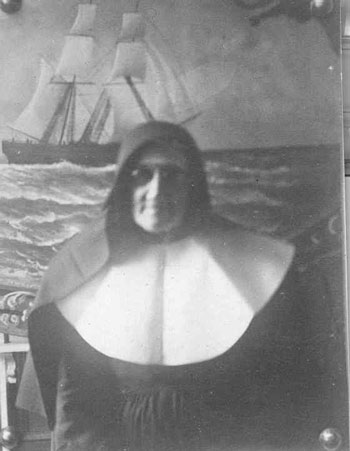
Six courageous Sisters of Notre Dame de Namur sail for six months on the Indefatigable from Belgium to Astoria, Oregon and open a school and orphanage to serve the Clatsop Indians and settlers. Their teaching is often interrupted by survival needs: milking cows, raising crops, cutting wood and making beer.
Circle
Three brave Sisters go by rail and coach from Cincinnati to Boston to take over the church school at St. Mary’s in what is now the North End of Boston. There are no stairs at their convent on Stillman Street, and they climb a ladder to get to their second-floor bedroom. Sometimes a Sister is stranded upstairs when one of them forgot to leave the ladder in place!
 Circle
Sisters Loyola and Marie Catherine journey from Oregon to San Francisco to meet Sisters arriving from Belgium for their Oregon mission. With 25 cents in their pockets and an abundance of faith, the Sisters remain to open a boarding school in San José, the College (high school) of Notre Dame (CND). In 1868, CND is chartered as the first college in California authorized to grant the baccalaureate degree to women, and is known as the “best school for young ladies” in the West.
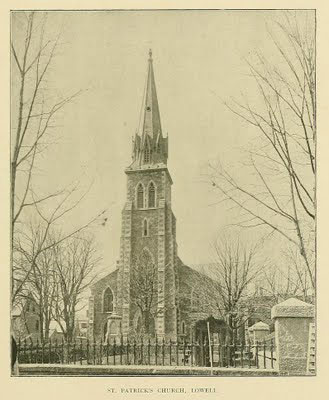
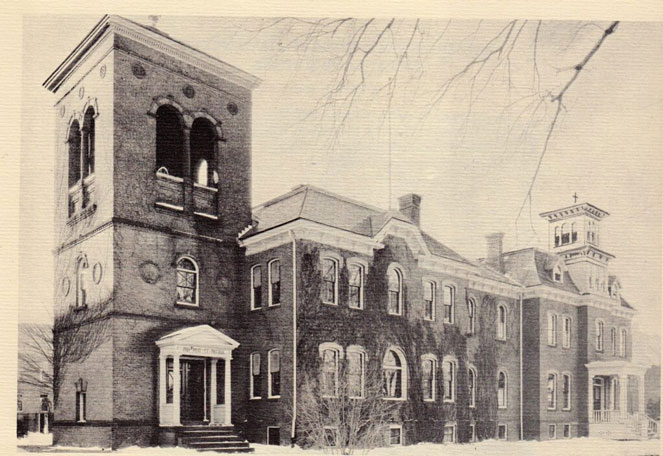
The Sisters open a school for children at St. Patrick’s in Lowell, Massachusetts to address the long-neglected educational needs of the girls of the area and to meet the city’s dire need for that era’s version of daycare. In 1854, they open a boarding school in Lowell.
 Circle
The Sisters open additional parish schools in Salem, Mass. and Notre Dame Academy (NDA), a boarding school for girls, in Roxbury, Mass. Over the coming decades, they opened schools across Massachusetts, including St. Mary’s School in Lawrence and the Holy Redeemer School in East Boston.

Five Sisters make the two-day trip from San José, Calif., to open a school in Marysville, Calif. Over the coming decades, they open schools across California.
Sisters open “The Academy,” a school for girls at the Parish of the Assumption in Philadelphia, Penn. They move to West Rittenhouse Square in 1867 (pictured) which becomes home to an elementary school, high school and residence for Sisters who teach throughout the archdiocese.
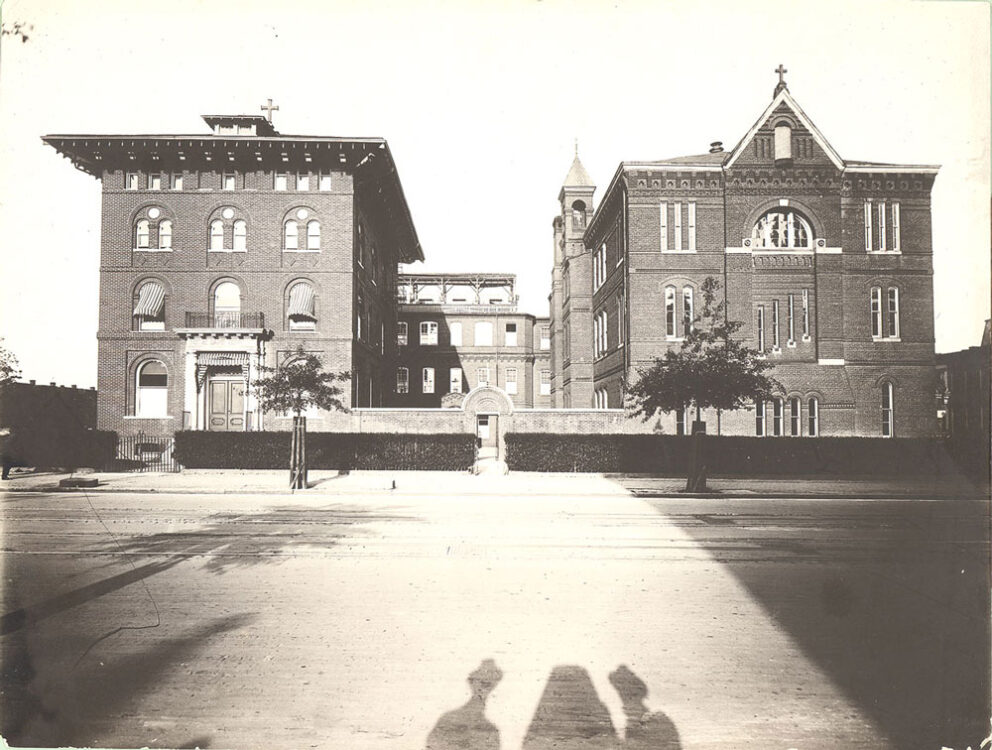
The Sisters arrive in Washington, D.C. and focus on meeting the immediate needs of the poor in the community. They begin three industrial schools for women, which quickly evolve to St. Aloysius elementary school for girls and then the Academy, all at North Capitol and K Streets.

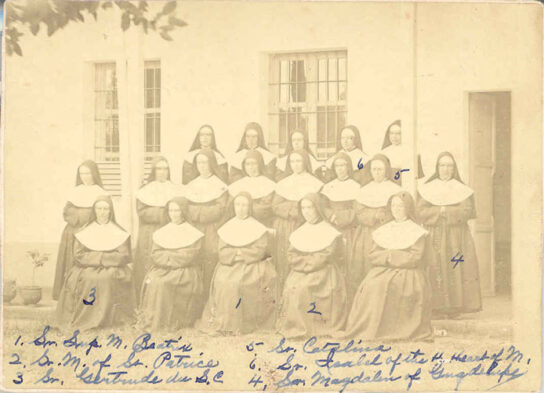
The Sisters are expanding around the world. Because of a radical change in government, Sisters are forced to leave the country of Guatemala, leaving behind families and many beloved students. Twenty-nine Sisters are welcomed in California.
Sisters begin St. Peter Claver School in Philadelphia, Penn., to educate African-American students.
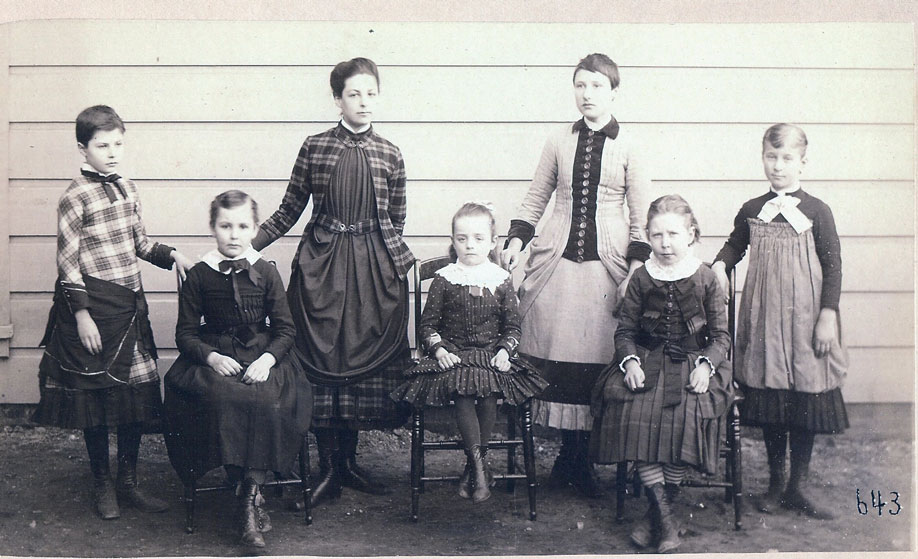 Circle
The opening of NDA in Alameda, Calif., marks the beginning of a trend to establish parish schools in California during the next several decades.
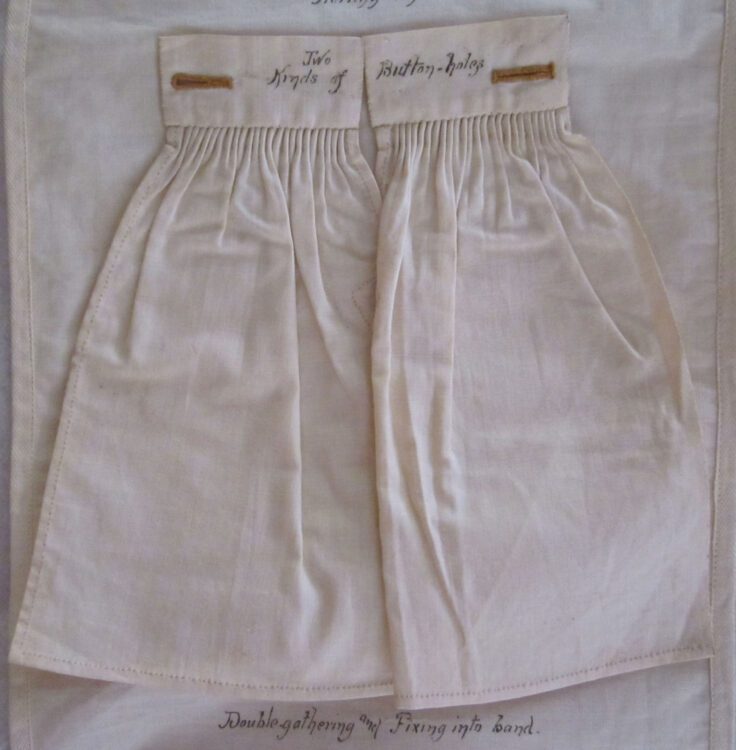
St. Julie Billiart believed girls should be able to support themselves, and sewing was a means to that end. Through the mid-20th century, sewing is part of the curriculum of the Notre Dame schools. The sample was designed by Sister Sabina Clancy (1869-1947) as part of the sewing curriculum used by all Notre Dame sisters.
 Circle
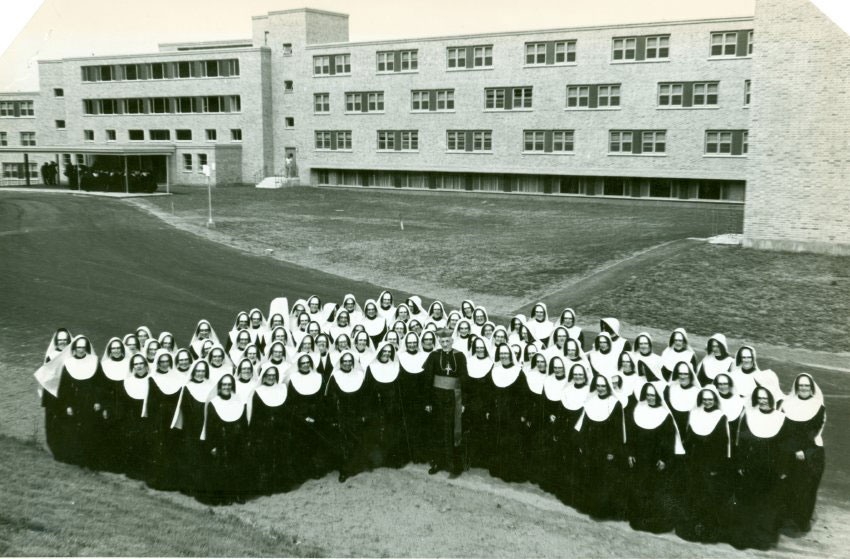
Sisters build their new novitiate in Waltham, Mass., to instruct novices, and are there for nearly a hundred years before moving to a new novitiate in Ipswich, Mass., in 1962.
 Circle
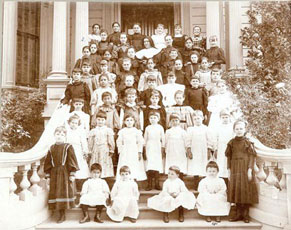
The O’Connor Institute (orphanage) opens in San José, Calif., a gift of and supported by philanthropist Mrs. Amanda O’Connor, who is moved by the needs of the orphans in San José.
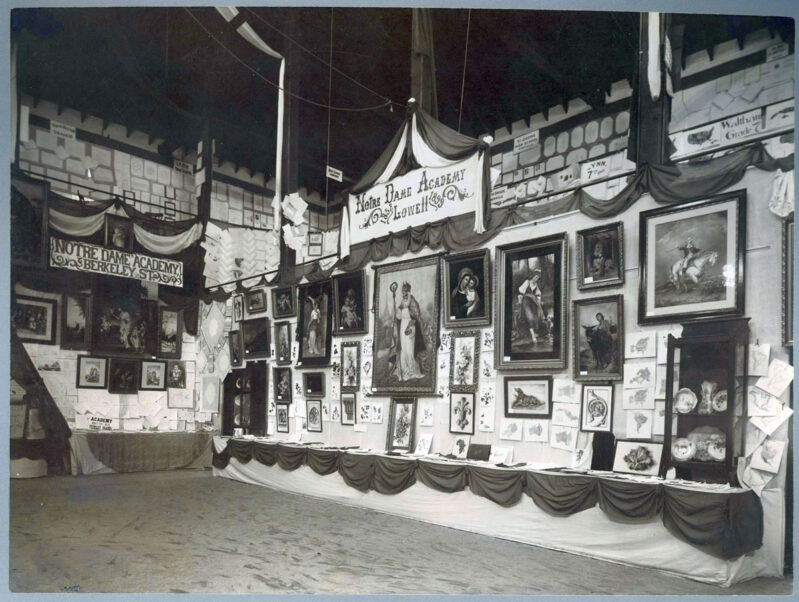
The Sisters participate in the World’s Fair in Chicago. Students from Notre Dame schools share examples of their lessons and art to demonstrate the strength of a Catholic education.

The Sisters open Trinity College in Washington, D.C., as the nation’s first Catholic liberal arts college for women. Today, Trinity enrolls about 2,000 students in three academic schools: College of Arts and Sciences, School of Nursing and Health Professions, and School of Professional and Graduate Studies.
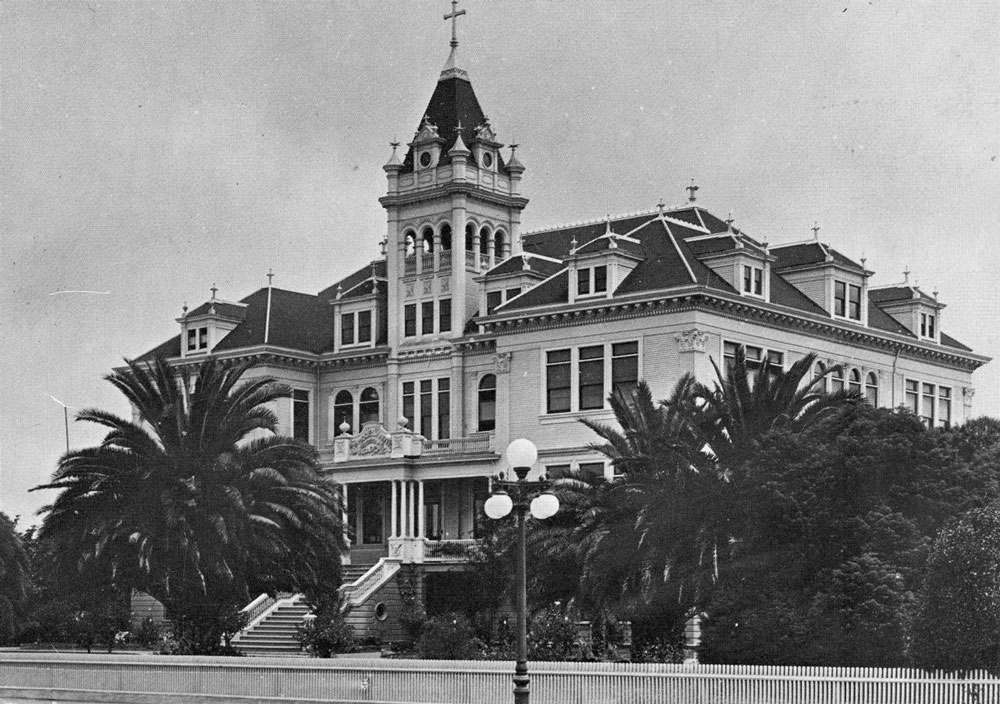
Mrs. Margaret Moreland builds Watsonville’s Moreland NDA in honor of her daughter Josephine, who had died while a student at the College of Notre Dame. Mrs. Moreland is not wealthy woman, and her gift is a sacrifice, but as she often says, it brings her many daughters in the place of her Josie.
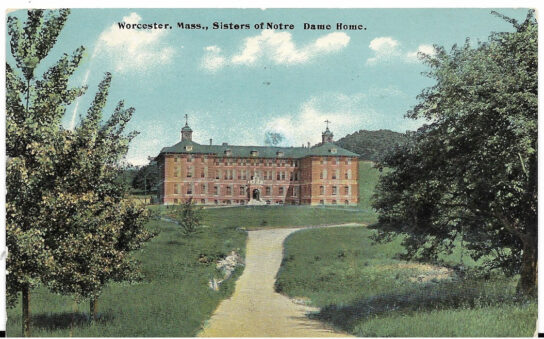
The Sisters purchase the Swan Farm in Worcester, Mass., and in 1906, the Sisters complete the work on Notre Dame du Lac, designed to be a place of rest for ill and ailing sisters.
 Circle
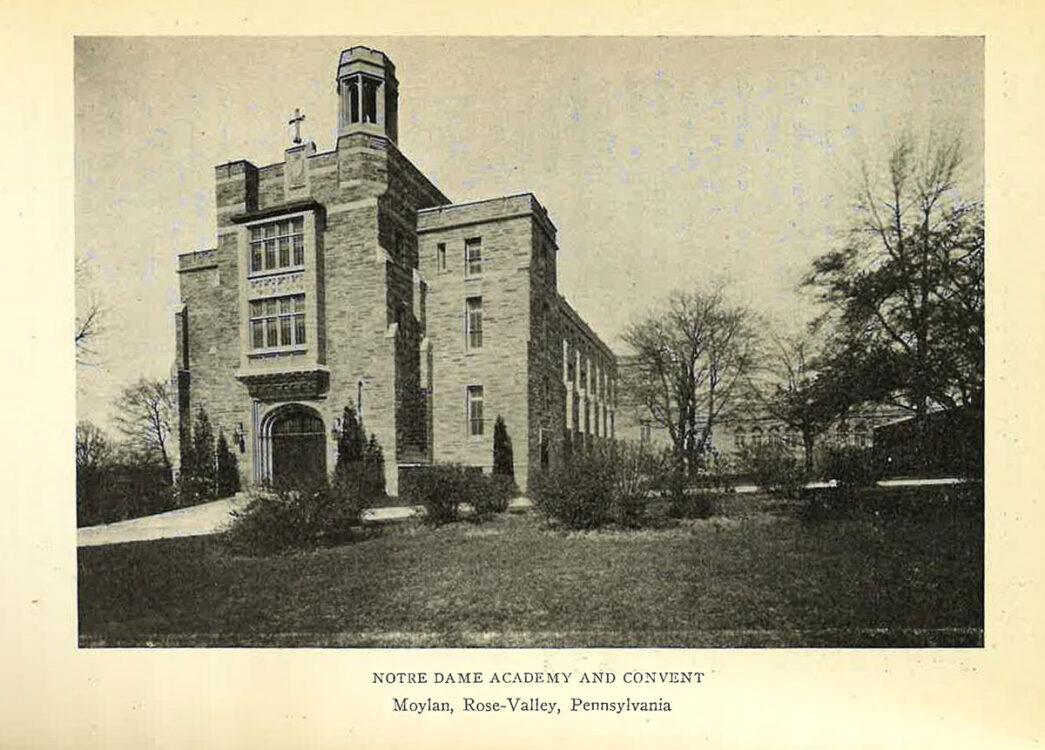
The Sisters purchase property in Moylan, Penn., as a summer residence for Sisters at Rittenhouse. In 1926, Notre Dame Academy, Moylan, opens and later becomes an archdiocesan high school — open to all — known as Notre Dame High School. At any given time, there are 45- 50 Sisters on faculty.

The Sisters purchase a farm house and property in Saratoga, Calif., as a place for the exhausted teachers to rest.
The 1906 Earthquake in California caused major damage to many schools. In an effort to prevent the spread of fire, the College of Notre Dame, San Francisco, school and convent complex, including the newly constructed addition, is dynamited to create a fire break. Sr. Mary Bernardine sends a telegram after the earthquake: “The Sisters, the children, all safe. God is good. Buildings can be rebuilt.”
The Sisters purchase the Tyngsboro property with an eye to opening a Notre Dame Academy. The estate is used for rest and retreat for the Sisters, and NDA Tyngsboro is later completed and opened in 1927 where it remains today. In 1931 the Academy in Lowell closes and students transfer to NDA Tyngsboro.
During the 1918 Influenza Pandemic, Sisters in Massachusetts, from Boston to Worcester, from Salem to Lowell, travel to nurse the sick.
 Circle
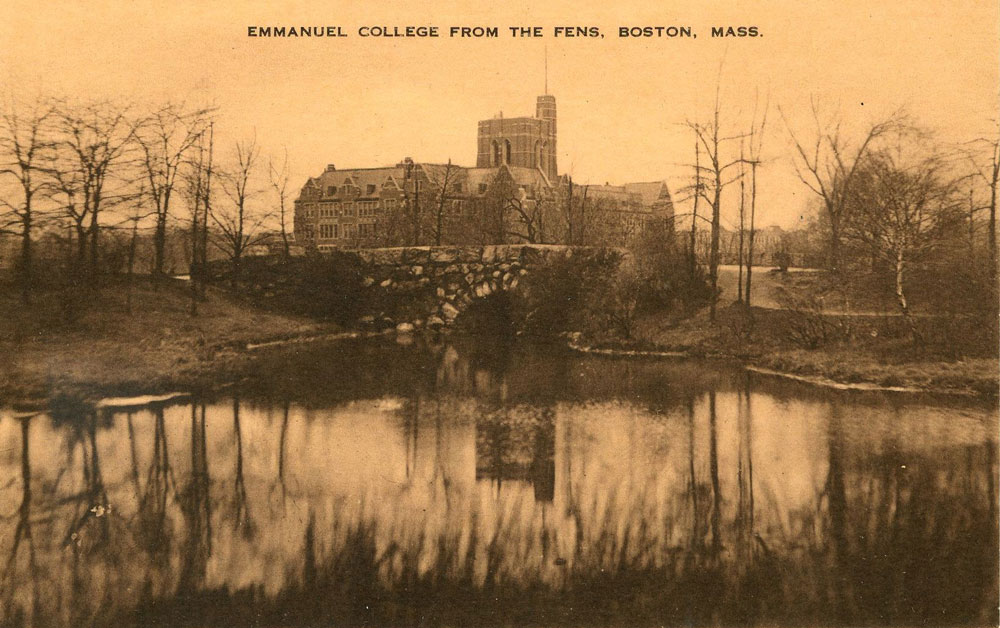
The Sisters open Emmanuel College, the first Catholic women’s college in New England. Today, Emmanuel College enrolls more than 2,000 students from 35 states and territories and 42 countries.
 Circle
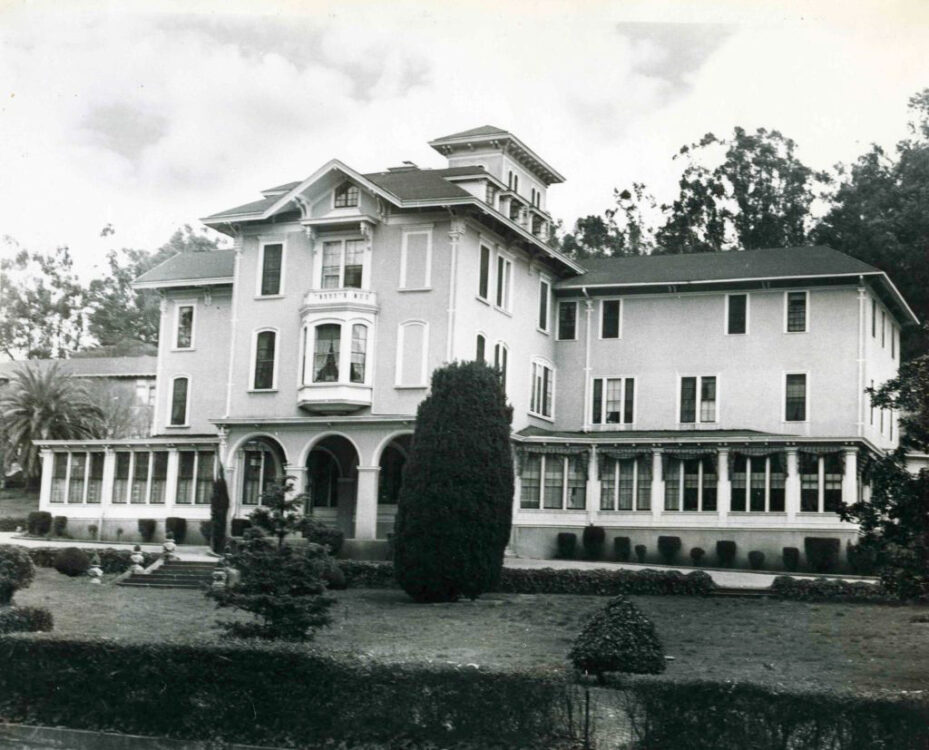
The Sisters acquire the William Ralston property in Belmont, Calif., and the College of Notre Dame — including the high school and elementary departments — and the novitiate and province administration move to Ralston Hall.
 Circle

Massachusetts Sisters are invited to Okayama, Japan, to take over a school previously run by the Sisters of the Infant Jesus.

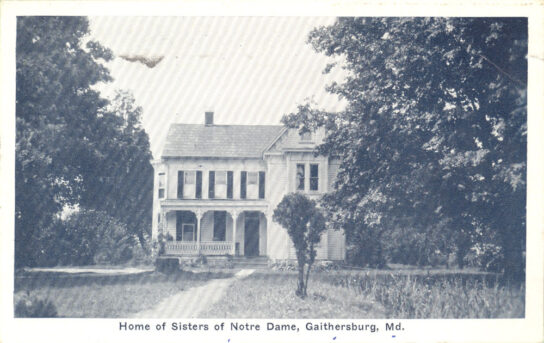
Two Sisters travel by train each week from Washington, D.C., to teach Sunday school classes at St. Martin of Tours Parish in Gaithersburg, Maryland, until a Convent is opened in the parish in February 1926.
Notre Dame High School San José moves to its new location at Second and Reed Streets in San Jose, Calif. The new site includes the former spacious home, which the Honorable and Mrs. Myles P. O’Connor had given to the Sisters in 1898. Notre Dame High School in San José is still at this location today.
Notre Dame Belmont High School opens in its new building in Belmont, Calif. The east wing of the school served as the elementary school location until Notre Dame Elementary moved up the street to its newly constructed school in 1957. Both schools continue to thrive in these locations.

Lady Maria Antonia Field gifts Villa Angelica, a beautiful property in Carmel, Calif., to her friend and former teacher Sister Angelica as a retreat house for Sisters. In 1943, it becomes the temporary home to Junipero Serra Elementary School — a school for children at the nearby Army base — as a wartime measure.

Waltham Province establishes a new province, Baltimore (which later becomes Maryland in 1959). This separation of the southern houses from Waltham attests to the apostolic vitality of Notre Dame, and the number of schools from New York to Washington, D.C., increases rapidly. The new Baltimore Province establishes its provincial house at Ilchester, Md. Photo during the visitation of Mere Josepha de St. Francoise in 1952.
After the attack on Pearl Harbor on Dec. 7, 1941, 12 Sisters teaching in Japan are arrested and moved to a concentration camp. In September 1943, through interventions from Switzerland, 11 of the Sisters are freed and sent home to the United States, while one Irish international Sister is held captive until the end of the war.
The Sisters open Julie Billiart Country Day School, now known as Trinity Elementary School, in Ellicott City, Md.
The Sisters begin their first mission in Connecticut as five sisters move into the convent at Assumption Parish in Westport, Conn., and begin religious instruction for the children. The Assumption School opens in 1950.

The Sisters purchase property at Villanova, Penn., and the Academy of Notre Dame de Namur opens. Today, the Academy continues to educate young women on “what they need to know for life” while preparing them to be the leaders of tomorrow.
Maryvale Preparatory School opens in Lutherville, Md., as a boarding school. The school becomes a day school for young women in grades 6 through 12 in 1976 and continues to provide an excellent education.
 Circle
Adventurous Sisters expand mission to Hawaii, teaching at Star of the Sea and Holy Family Schools in Honolulu.
Villa Julie opens in Stevenson, Md., as a retirement house and infirmary.
Notre Dame Academy opens in Worcester, Mass. Today, NDA continues its tradition and graduates are confident women who are lifelong learners, spiritual seekers and compassionate global citizens.
 Circle
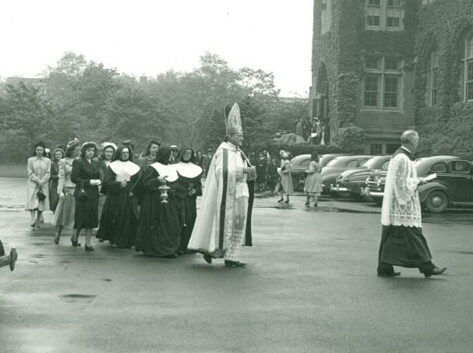
As president of Emmanuel College, Sister Alice Gertrude Keating begins work to transform the college from a commuter school to a residential college. By the end of her term in 1960, she adds three more buildings to house residential students.
College of Notre Dame in Belmont, Calif., becomes a four-year college, with 23 Sisters involved in teaching, administration or emeritus positions. A decade later, in 1967, CND admits its first male students, and in 2001, it becomes Notre Dame de Namur University.
NDA Boston and NDA Roxbury merge and become NDA, located in Roxbury. A decade later, in 1965 the school relocates to its new facility in Hingham, Mass., where NDA Hingham continues today.
 Circle
Sisters open the Lt. Joseph P. Kennedy Institute in Washington, D.C., and are pioneers in programs for mentally handicapped children that become a model in the District of Columbia and beyond.
By 1959, the Massachusetts Sisters staff many more schools. That same year, the Massachusetts Province creates the Connecticut Province.
The Sisters purchase a beautiful property in Ipswich, Mass., that includes a villa, a dairy barn and a carriage house. The Sisters live in the manor until the novitiate is completed in 1962. Today, the property also includes the Notre Dame Spirituality Center, St. Julie Billiart Residential Care Center, the province and international offices, and the Cuvilly Arts and Earth Center at the former dairy barn.


1960s and 70s
The 1960s and 1970s are a time of change: Sisters start to drive, receive permission to watch TV and go swimming, and are allowed to visit family. They modify their habit and later adopt the Notre Dame cross as a symbol of their congregation’s identity.
 Circle
Canonization of St. Julie Billiart.
Sisters respond to the challenges put forth by Vatican II. While continuing their strong commitment to education, Sisters serve in diverse ministries, in parishes and non-profit agencies doing community organizing, legislative advocacy, justice and peace work.
A community of Sisters begin living in Hunters Point, a neighborhood in San Francisco, as a ministry presence with the poor. They work closely with the Redemptorist Fathers in this vibrant faith community.
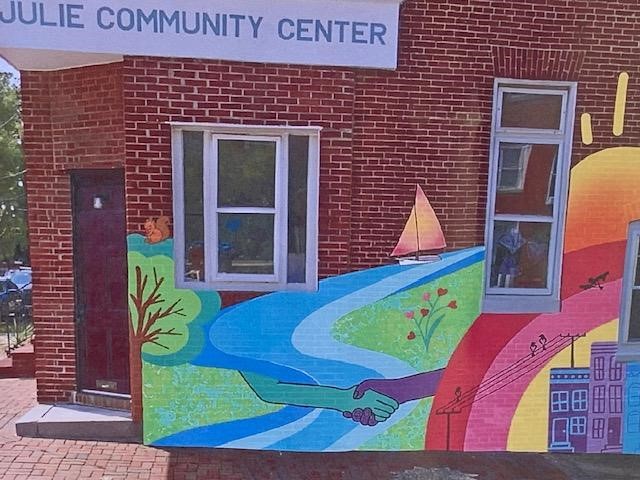
The Julie Community Center is established in East/Southeast Baltimore to help community members (in particular those on low and fixed incomes) access needed resources and support, develop instruments that both combat poverty and urban decline, and foster individual and neighborhood pride, participation and self-determination.
 Circle

Over the next two decades, 18 Sisters serve in the Diocese of Fairbanks. Five Sisters spent several years in “bush” Alaska, living and working with Athabascan Indians and Inupiat and Yup’ik Eskimos.
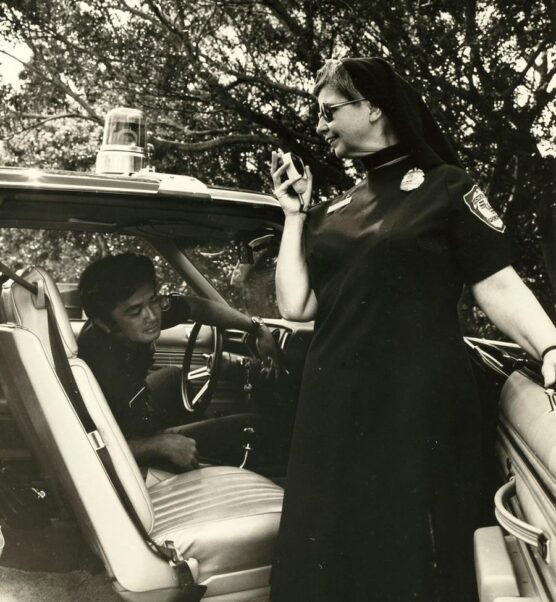
While teaching English to police officers at Chaminade College in Hawaii, Sister Roberta Julie Derby is asked to serve as chaplain for the Honolulu Police Department. The first female police chaplain in the United States, she receives a medal of valor for defusing a hostage situation.
Sisters found the Big Laurel School (now Big Laurel Learning Center) — a one-room school in the mountains with no indoor plumbing — to educate the children of rural Appalachia of West Virginia. Others follow to work with domestic violence victims, Head Start preschoolers and in parish ministries, and Sisters remain active today.
 Circle
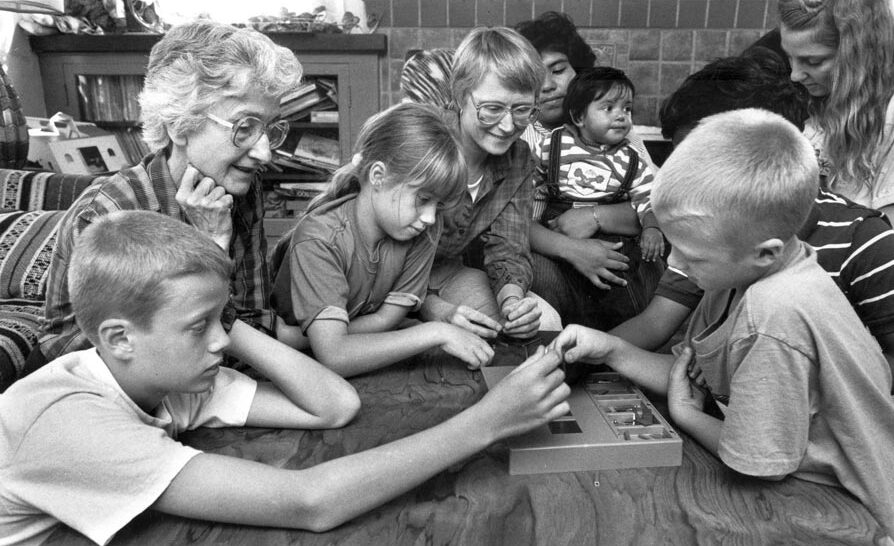
Sister Susan Olson and Sister Marie Veronica Wagner open a shelter for women and children, offering budgeting and parenting classes as well as job‑seeking support to help them move toward stable housing.
Pajaro Valley Shelter Services continues today as an essential program in Santa Cruz County, serving more than 200 families annually.

The Notre Dame Mission Volunteer/AmeriCorps Program is launched, placing volunteers at sites nationwide to work alongside God’s people, especially the economically disadvantaged. NDMV volunteers promote literacy and education, dedicating themselves each day to serving alongside one another as they support community needs and transform lives through learning.
 Circle
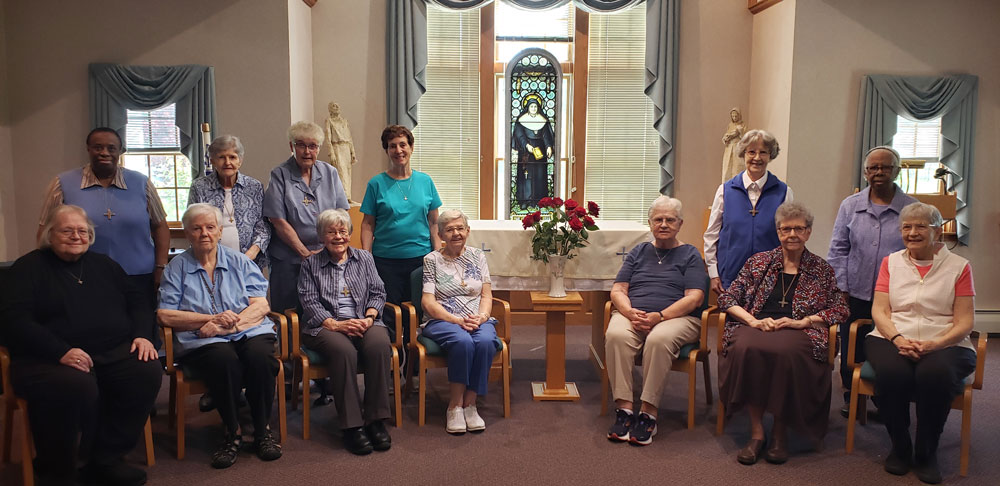
Julie House is dedicated in Windsor, Conn., to offer senior living and care for Sisters. That same year, 51 Sisters moved to the newly built Notre Dame Long-term Care and Rehabilitation in Worcester, Mass. Some travel by wheelchair “down the hill” from the Notre Dame Convent.
The Sisters purchase the Cable Street building and establish the Chesapeake Province Center, which today remains as the regional office.
 Circle
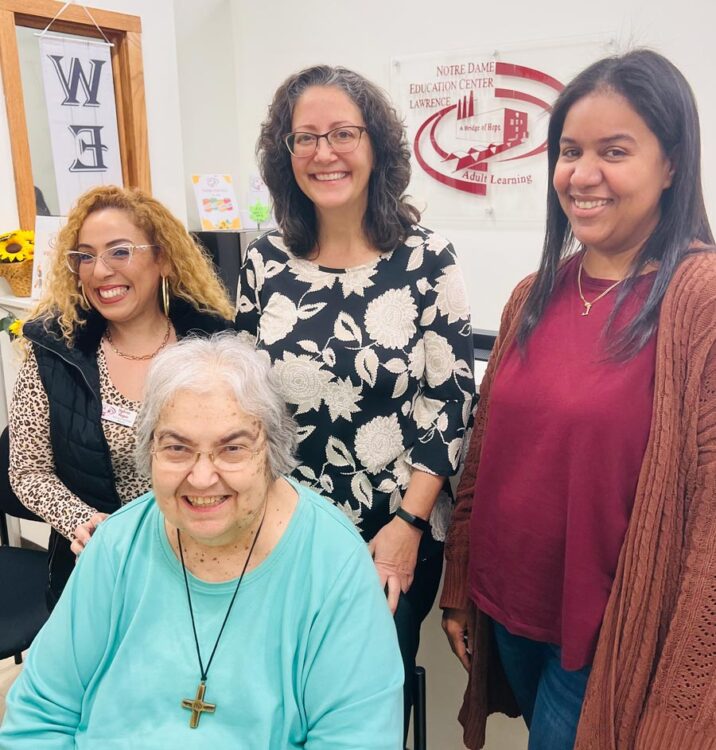
The Sisters open Notre Dame Education Center (NDEC) in Lawrence, Mass., as an inclusive community of learning that offers English language and citizenship classes, skills training, and leadership development — tuition-free or low-cost — for the immigrant community.


The Notre Dame Virtual School launches to connect the educational ministries of the Sisters of Notre Dame de Namur, facilitate global networking and collaboration, and provide a forum for teachers and students to share educational resources. NDVS begins with seven schools and 40 students in the United States and Britain and, within four years, the school’s membership doubles. NDVS now has schools in Belgium, Japan and Nigeria, as well as the original schools in Massachusetts and Britain.
The Sisters of Notre Dame de Namur receive United Nations accreditation and, in 2002, Sister Joan Burke, SNDdeN (then serving in Nigeria) is named as the first SNDdeN NGO representative.

The Belmont Province Center opens in Belmont, California, and welcomes its new staff and residents.

Sisters Academy of Baltimore — a collaboration of four sponsoring religious congregations — opens as a tuition-free, independent middle school for girls in grades 5-8 in Baltimore.
Notre Dame Cristo Rey High School (NDCR), a college preparatory high school, officially opens in Lawrence, Mass., to serve economically disadvantaged youth. Now based in Methuen, Mass., NDCR offers the Corporate Work Study Program, a unique partnership with the local business community where students work five full days per month during the academic year at a participating company. The program enables students to earn tuition while gaining valuable on-the-job experience.
Ipswich, Boston, Connecticut, Chesapeake and California Provinces merge to create the U.S. East-West Province.
 Circle
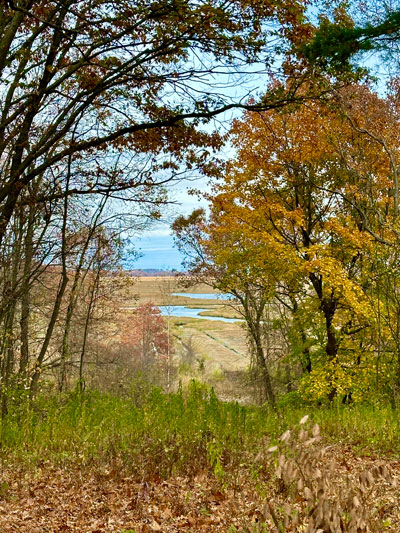
The Sisters formalize their commitment to the Laudato Si’ Action Platform (LSAP) — a global appeal to all Catholics and persons of goodwill to join together to form a movement based on the Laudato Si’ agenda centered on Pope Francis’ 2015 encyclical — by enrolling on Earth Day, April 22.
 Circle
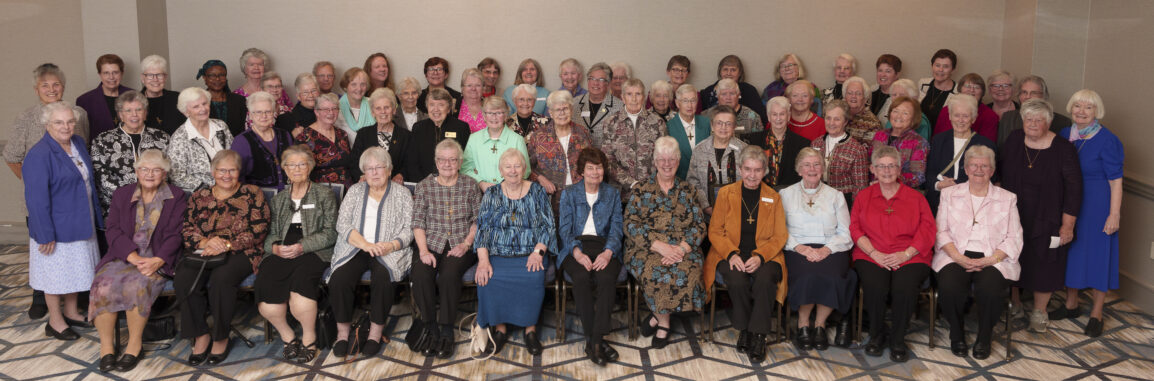
Celebrating 100 years of SNDdeN in Belmont, California
From 1851, when two Sisters arrived in Oregon with only 25 cents in their pockets and an abundance of faith to found the College of Notre Dame to today, we recognize a century of accomplishments, love and faith.
 Circle
175 years in New England
In November 1849, three Sisters of Notre Dame de Namur clandestinely arrived in Boston to manage the parish school at St. Mary’s in the West End, marking the beginning of a pioneering journey that would shape education and community service in New England for generations to come.
Read more: 175th in New England 2024
Circle
125 Years in Moreland, California
The Moreland Notre Dame School community in Watsonville, California, celebrated 125 years of faith-filled education and Notre Dame spirit.
Read more: 125 Years
And beyond!
Today, the Sisters work where the need is greatest, fulfilling St. Julie’s vision through tireless service in healthcare, education, parish, and social justice ministries. Our international congregation is located on 5 continents and in 16 countries. In the United States, we serve in 23 states and the District of Columbia.
This year, we are celebrating several milestones:
Notre Dame Virtual School’s 25th anniversary
A Legacy of Making Known God’s Goodness
Timeline Credits:
Many thanks to our archivists Nancy Barthelemy, Ipswich, Massachusetts (EW Province); Sister Kim Dalgarn, SNDdeN, Cincinnati, Ohio (Ohio Province); Sister Mary Hayes, SNDdeN, Washington, D.C. (Trinity Washington University); and Kathleen O’Connor, Belmont, California (EW Province).