Our Commitment to Care for the Earth
December 30, 2025
Composting: A Community Effort
BY SISTER MARY ALICE McCABE, SNDdeN
The Problem—Landfill Methane Emissions:
It is a common misconception that when we throw things away, they simply disappear. In reality, much of what we discard ends up in landfills. In the United States, food is the most common material sent to landfills, accounting for almost a quarter of municipal solid waste and generating 58% of landfill methane emissions. Methane has 80 times more global warming potential than carbon dioxide over a 20-year time scale.
An Action—Composting:
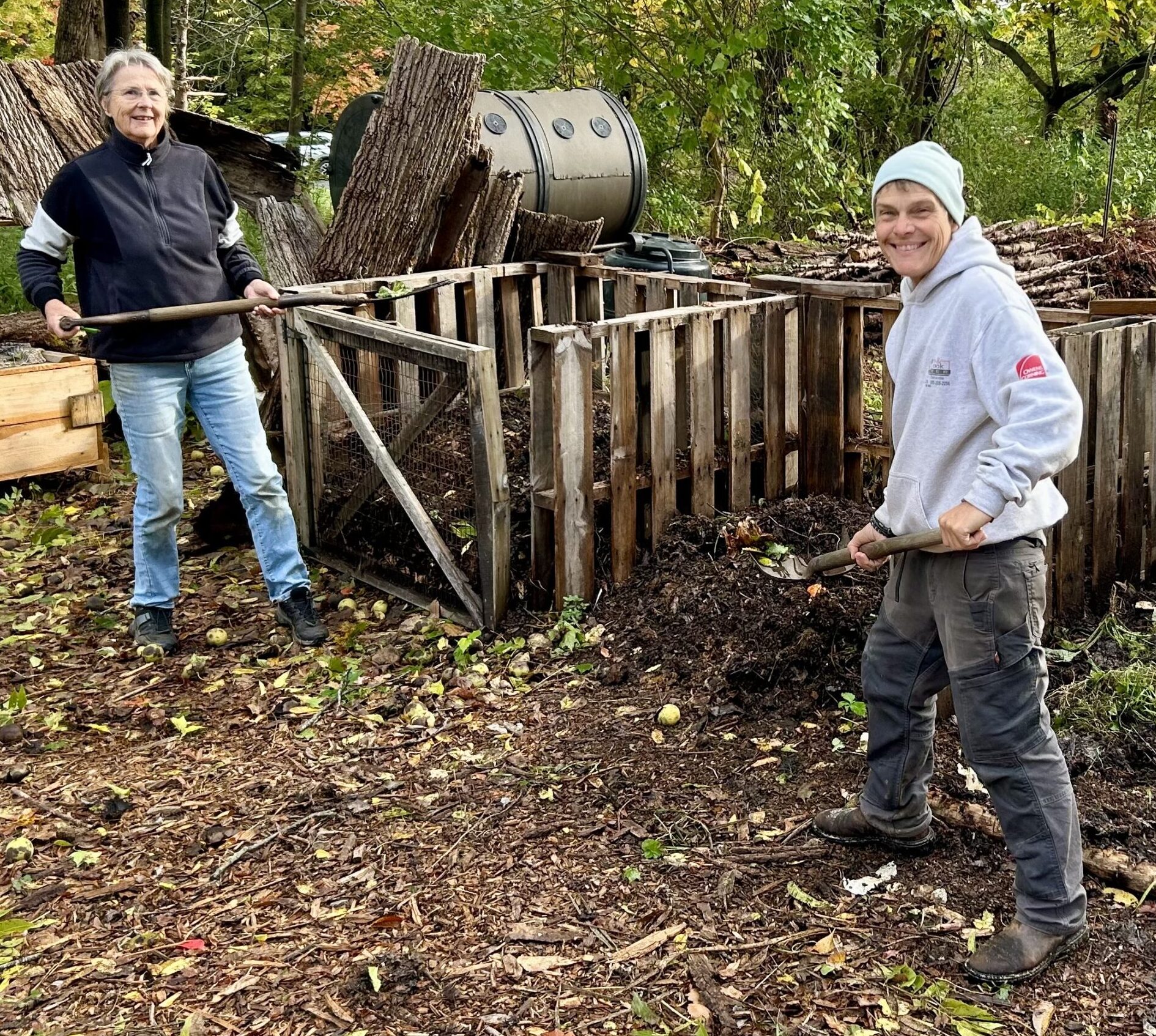
Melinda Booy works with J.C. Sawyer to turn the compost.
Composting not only reduces these emissions but also reverses their effects. Microorganisms transform organic waste into a slow-release fertilizer that strengthens the soil, helps it store carbon, and increases its resistance to extreme weather conditions. Composting enables us to take responsibility for the waste we generate and work collectively toward climate solutions.
At the Notre Dame community in Ipswich, Massachusetts, composting has become a shared commitment. Beyond turning waste into a valuable resource, it unites Sisters and staff around a common goal and deepens ecological awareness.
Each day, food scraps—vegetable and fruit peelings, eggshells, coffee grounds and tea bags—are collected from the central kitchen and from compost pails on every floor. The scraps are brought to the Cuvilly Arts and Earth Center (Cuvilly) compost station. Sister Ani Wihbey, SNDdeN organized this system, which over time has become a genuine community effort, involving a dedicated team of gatherers, deliverers, and drivers.
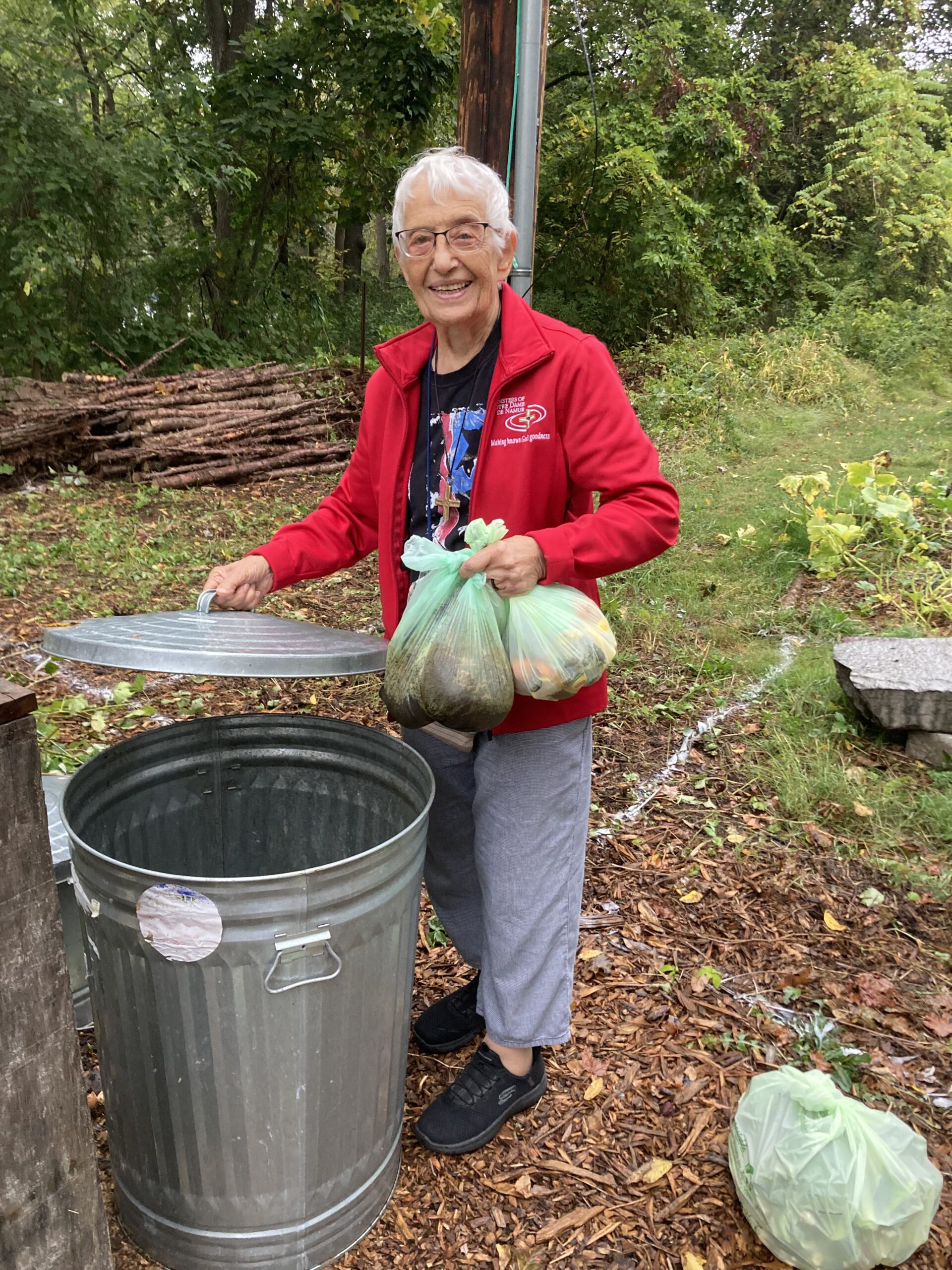
Sister Ani Wihbey, SNDdeN collects the compost from the Ipswich Province Center.
At Cuvilly, organic farmer J.C. Sawyer and volunteer gardener Melinda Booy mix food scraps with used animal bedding from the barn to balance carbon and aid decomposition. Two methods are used: hot composting, which requires frequent watering and turning and produces compost more quickly, and cold composting, which takes longer but requires less labor and water. Both create nutrient- rich compost that enriches Cuvilly’s landscape and sequesters carbon in the soil. Sawyer has also introduced vermiculture— using red-wiggler worms to produce a nutrient-dense fertilizer known as worm castings.
A visit to Cuvilly’s composting station offers a hands-on learning experience in all three methods. Together, the Sisters of Notre Dame-Ipswich and Cuvilly Arts and Earth Center model a small but powerful way to care for our planet—our common home.
This story is also featured in the Winter 2025 edition of our Sowing Goodness magazine.