Make a Break from Plastic
July 10, 2026
By Kathryn Yanik, Director of Justice, Peace and Integrity of Creation
Aside from my current role, my favorite job has been the summer I worked as a park ranger in Brooklyn’s salt marshes. Our mantra was “Reduce, Reuse, Recycle – the order matters!” Especially in an urban environment, it can be easy to forget that our recycling doesn’t just disappear on a Monday morning when the garbage truck takes it away. Yes, there is a slim chance that it may make it to a facility to be made into other materials, but the vast majority of our recycling garbage goes into a landfill.
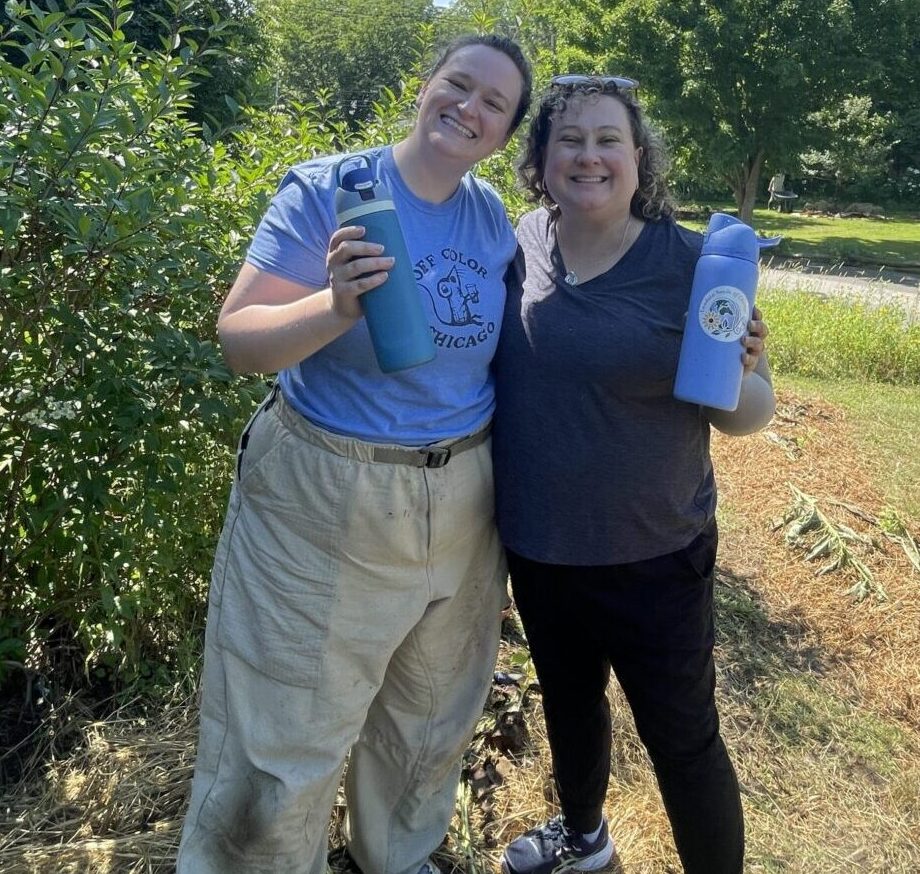
Laudato Seeds of Change participants take a water break with their reusable bottles.
Last year, the Laudato Si’ Team hosted a reflection series on plastics. From their presentation, I learned that, on average, the world produces 430 million tons of plastic each year, two-thirds of which are used for only a short time. According to the United Nations, 46% of plastic waste ends up in a landfill, 22% becomes litter (especially in the ocean), 17% is incinerated and 15% is collected for recycling. Less than 9% is actually recycled, with only 2-3% going into higher-quality products.
The only true way to avoid plastic pollution is to reduce our plastic consumption. There are times when it might be necessary to use plastic (for example, plastics have transformed the practice of medicine), but our daily uses often have alternatives. Below, I have included a few suggestions from our Laudato Si’ Team and some of our sisters:
Firstly, we can take action as consumers. Plastic-Free July invites us to experiment with reducing or eliminating plastic for just a month, to see what we can add to (or subtract from) our routines. We can bring our own cloth bags and metal water bottles when we travel. At the supermarket, we can avoid buying goods wrapped in plastic. This might mean buying individual pieces of fruit, or shopping at a local farmers market or co-op where there are more options. When plastic household or kitchen items wear out or break, this is a good time to buy new ones made of aluminum or glass. We can also look for solid versions of products like shampoo or laundry detergent.
Our advocacy is also important – on a large and small scale. I send a monthly email to Trader Joe’s saying that I won’t buy their tea again until they stop wrapping each bag in plastic – and in the meantime, I grow chamomile and lavender in my garden as an alternative. But we should also remember to thank stores that carry sustainable products and encourage them to continue their sustainability mission! Many of our Sisters know the importance of a single thank you. An acknowledgment to a small business, in particular, for the way they package their products, can be quite meaningful.
Finally, we should always be aware of what is happening at the federal level, especially regarding drilling, fracking and pipeline construction. State advocacy can be particularly effective, especially during this time. We should find out if we live in states with plastic operations, which can have a significant health impact on workers and communities. Here in the United States, most plastic production occurs along the Gulf Coast, especially in Texas and Louisiana.
Living plastic-free is not easy, especially in a consumeristic culture! However, there is more that we can do this summer and throughout the year to focus on local, eco-friendly products. Our Sisters continue to encourage me on this journey toward a more sustainable future!