The African Photovoltaic Project
July 18, 2025
By Susan Dennin and Sister Lorraine Connell, SNDdeN
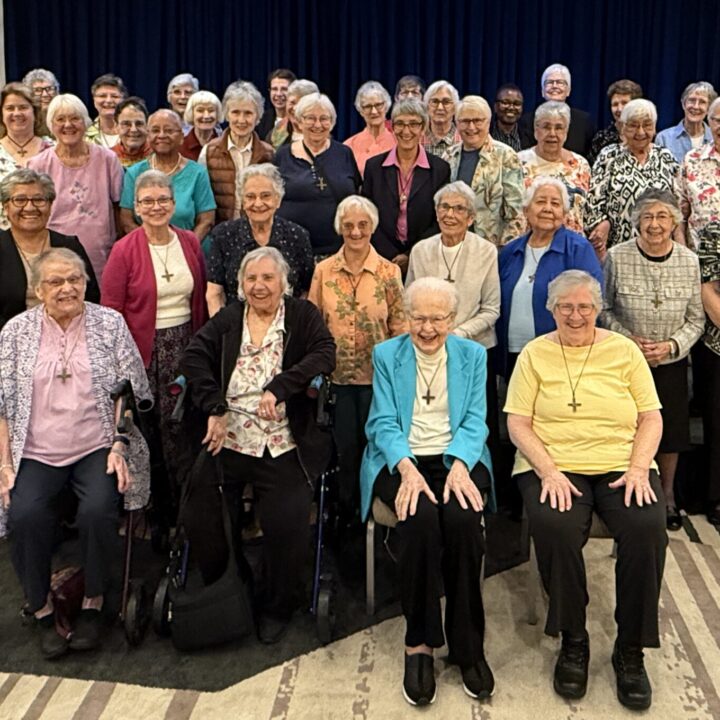
In 2005, the Sisters of Notre Dame de Namur launched the African Photovoltaic Project (APP), a transformative clean energy initiative envisioned by Sister Lorraine Connell, SNDdeN.
The vision was inspired by a call from the General Chapter of 2002 to provide communications to the parts of the Congregation that could not access public provision of electricity, water and the Internet. The General Government asked the Congregational Finance Office to research how to address the problem through a sustainable solution.
“Empowering people to participate in the economic engine of their communities builds global peace and stability.”
—Sister Lorraine Connell, SNDdeN
Her answer came from the sun! Between 2003 and 2005, Sister Lorraine developed her idea into a fully operational project guided by research, consultation and on-site design. A prototype was first tested at Cuvilly Arts and Earth Center in Ipswich, Massachusetts.
Harnessing solar energy has proven to be a robust and sustainable solution. And, with the support of the whole congregation, the Photovoltaic systems now provide continuous, reliable electricity in rural African villages— empowering schools, clinics and entire communities. In areas where clean water is often unavailable and electricity is inconsistent, solar power enables the filtration and purification of water, reduces the burden of manual labor, and minimizes the spread of waterborne diseases.
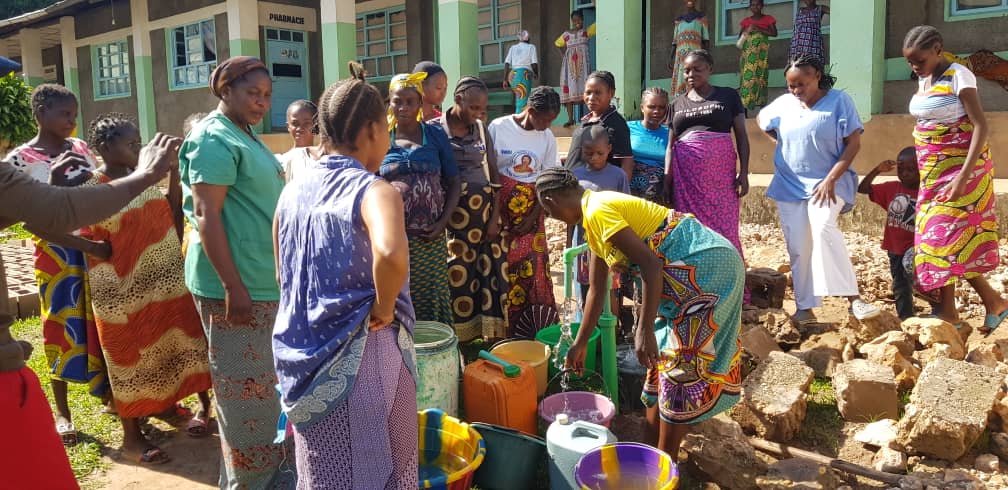
Village children in Pelende, Democratic Republic of the Congo, gather around to collect clean water.
Beyond electricity, the project enhances communication. Internet access, initially meant to connect Sisters across continents, now opens doors to education and medical resources for students and staff alike.
The Sisters learn how to operate, repair and maintain these advanced solar systems for long-term success. Clean energy isn’t just lighting buildings—it’s lighting futures. The app is a beacon of sustainability, resilience and hope, proving that the sun can power technology and transformation.
New technological improvements and the expansion of renewable energy across the globe have provided additional resources in-country for many of these projects. Maintenance costs will continue to exist in the years ahead. As the Congregation grows in our less-developed areas, fundraising and oversight will continue to be needed and provided.
This story appears in the Summer 2025 edition of Sowing Goodness. You can read current and past issues here.